
Distressed Denim and Patch Work
Distressed denim is a finishing discipline, not a defect. Whiskering, grinding, destruction and patch application are each deliberate operations, done by hand to a reference, and we run them in house from 30 pieces per style.
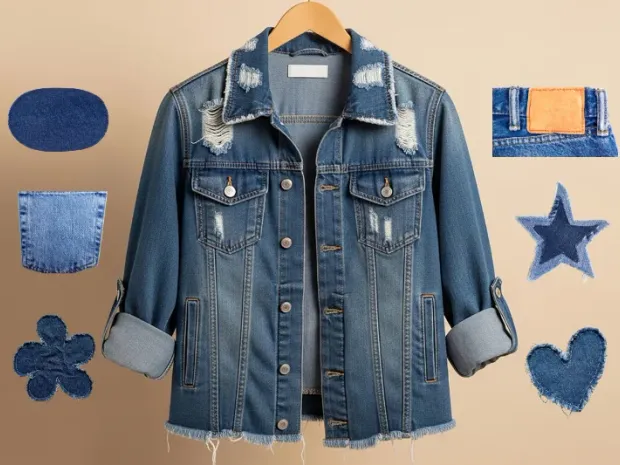
What distressed denim actually is
Distressing covers several separate operations. Whiskering creates the fade lines at the hip, grinding wears down hems and pockets, and destruction opens controlled holes backed with thread or a contrast panel.
All of it is hand work guided by a reference garment. That is why an approved sample matters more here than almost anywhere else: you are approving a look that a person will then reproduce across the run, not a machine setting.
Patches sit alongside distressing as the other half of the denim vocabulary. Woven, embroidered, leather and chenille patches can be stitched or heat-applied, and they pair naturally with a distressed base.
Where it works best
- Denim jackets and jeans with a worn, lived-in finish
- Streetwear pieces where texture is the product story
- Applied woven, embroidered or leather patches
- Contrast-backed destruction and repair detailing
- Small-run capsule drops testing a finish before scaling
Where it is the wrong choice
Anything requiring identical, machine-exact repeatability piece to piece. Hand distressing produces natural variation, which is the point of the finish but is not what you want if your spec demands every unit be indistinguishable. It also weakens the fabric by design, so it is unsuited to workwear.
From your artwork to a finished garment
Reference & spec
You send a reference garment or images. We agree exactly which operations are in scope and how heavy each one goes.
Sample finishing
A physical sample is distressed to the reference so you can approve the actual look, including how much variation you are happy with.
Bulk finishing
The approved sample sits on the line as the standard. Every piece is worked against it rather than against a description.
Patch & QC
Patches are applied, then each piece is checked against the approved sample for placement, intensity and structural integrity.
Distressed Denim & Patches questions, answered
No, and that is deliberate. Hand distressing produces natural variation between pieces, which is what makes the finish read as authentic rather than printed on. We control the range of that variation against an approved sample, so pieces are consistent in character without being clones. If you need machine-exact repeatability, distressing is the wrong technique.
Thirty pieces per style. Distressing is labour rather than setup, so unlike screen printing the per-piece cost does not fall as sharply with volume. That actually makes it one of the better techniques to test at a low quantity.
Yes, and it is the best way to brief this work. Send us the actual garment or clear photographs of the finish you want, and we distress a sample to match. Describing distressing in words almost never produces what the client pictured, so we work from a physical reference wherever possible.
Woven, embroidered, leather, chenille and PVC patches, applied either by stitching or heat. Stitched is more durable and is what we recommend on anything that will be worn hard. We produce the patches in house alongside the garment, so there is no separate supplier to coordinate.
Other decoration techniques we run in house
Ready to Put Distressed Denim & Patches on Your Product?
Send your artwork and spec. A real person at our Sialkot factory replies with per-piece pricing within 12 hours, from 30 pieces per style.
- 30-piece MOQ
- ~10-day samples
- Ships worldwide
- 12-hour reply
Got it, thanks!
We'll reply by email within 12 hours. Want a faster answer? Send the same details straight to our WhatsApp now.
Send to WhatsApp for a faster reply