 Wears For You Team
The clothing brand failure rate sits at roughly 90%, meaning only 1 in 10 clothing startups survive long term. That single number gets quoted everywhere, but it rarely tells the full story. When did those brands fail? Why? And what separates the 10% that survive from the 90% that do not? This article compiles the most current failure rate data for clothing brands and fashion startups in 2026, sourced from the U.S. Bureau of Labor Statistics (BLS), industry analyses, and market research. Whether you are planning to launch a clothing line or trying to keep one alive, these numbers will give you a clear picture of what you are up against. Key findings at a glance:
- 90% of clothing startups fail over their lifetime (Sources: Exploding Topics, Failory, Small Business Trends)
- 20% of fashion startups close within the first year
- 80% of new fashion brands fail within five years
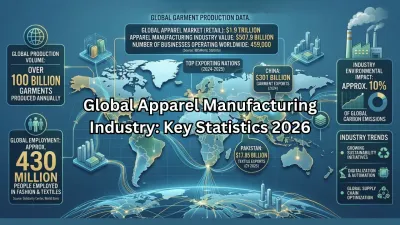
- The global apparel market reached $1.9 trillion in 2026, yet new entrants still struggle
- No market demand and cash flow problems account for more than 70% of startup failures across industries
What Is the Clothing Brand Failure Rate?
The clothing brand failure rate refers to the percentage of new clothing businesses that cease operations within a given time period. Based on aggregated data from multiple sources, the overall failure rate for clothing startups is approximately 90%, with only 10% achieving long-term viability. This rate is significantly higher than the general small business failure rate of 65.3% over ten years, as reported by the BLS in 2024. The fashion and apparel sector faces elevated failure rates due to a combination of factors: high competition, razor-thin margins, fast-changing consumer preferences, significant upfront capital requirements, and complex supply chain management. Unlike software or service businesses, clothing brands must manage physical inventory, manufacturing lead times, and seasonal demand cycles simultaneously.
Clothing Brand Failure Rate by Year: The Survival Timeline
No single source tracks clothing-brand-specific survival year by year, but combining BLS retail data with fashion-industry analyses produces a clear pattern. Here is the estimated survival timeline for new clothing brands based on available research:
| Time Period | Estimated Failure Rate | Estimated Survival Rate | Key Risk Factors |
| Year 1 | 20-22% fail | 78-80% survive | Cash flow, product-market fit, launch execution |
| Year 2 | 30-35% cumulative | 65-70% survive | Reorder economics, customer acquisition cost |
| Year 3 | 45-50% cumulative | 50-55% survive | Scaling challenges, inventory management |
| Year 5 | 75-80% cumulative | 20-25% survive | Brand differentiation, profitability |
| Year 10 | 85-90% cumulative | 10-15% survive | Market relevance, operational efficiency |
Sources: BLS Business Employment Dynamics (2024), Failory, Small Business Trends, LendingTree analysis of BLS data. Note: Clothing-specific figures are estimated by cross-referencing general retail data (BLS) with fashion-industry failure rates (Failory, Exploding Topics). Exact clothing-only BLS breakdowns are not published separately. The steepest drop happens between years two and five. This is the period when initial excitement fades, repeat customers must be earned rather than attracted, and the true unit economics of manufacturing and selling clothing become visible. Brands that survive past year five typically have solved their supply chain, found a repeatable customer acquisition channel, and reached a point where revenue covers operational costs.
How Fashion Compares: Failure Rates Across Industries
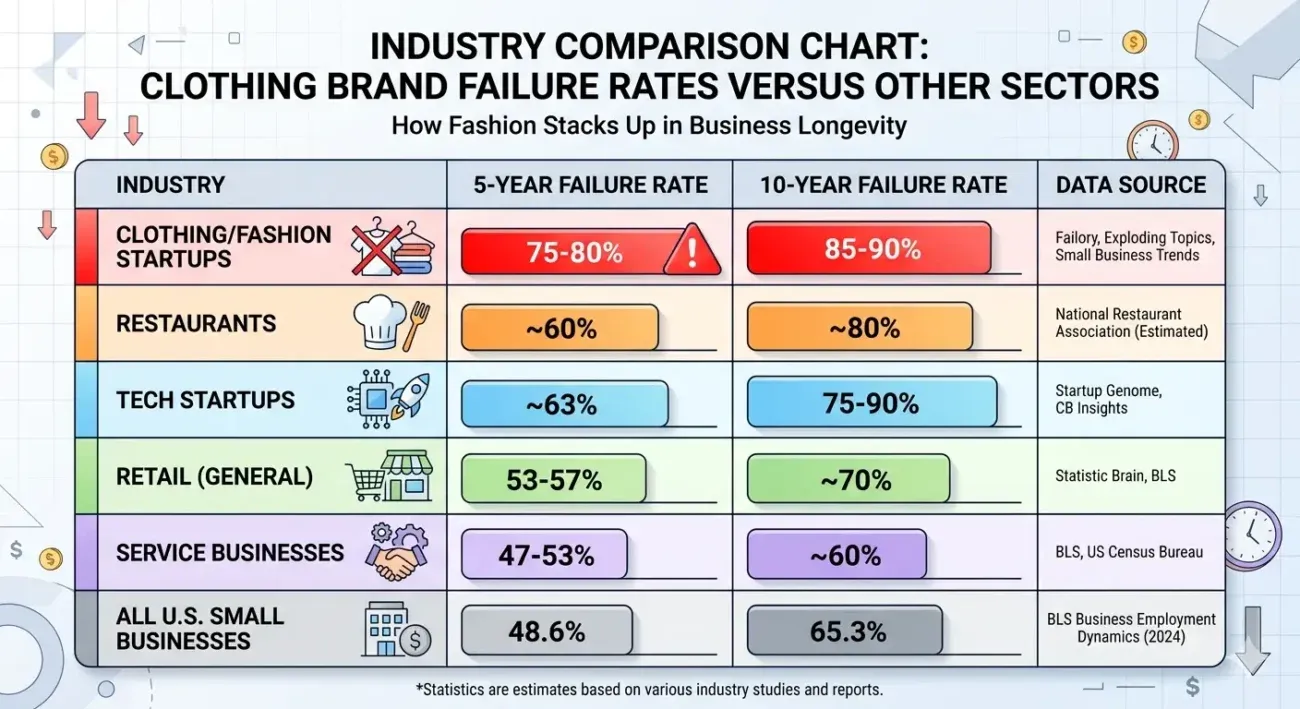 Clothing brands fail at higher rates than businesses in many other sectors. Here is how fashion stacks up against other industries:
| Industry | 5-Year Failure Rate | 10-Year Failure Rate | Source |
| Clothing/Fashion Startups | 75-80% | 85-90% | Failory, Exploding Topics, Small Business Trends |
| All U.S. Small Businesses | 48.6% | 65.3% | BLS Business Employment Dynamics (2024) |
| Restaurants | 60% | 80% | National Restaurant Association (Estimated) |
| Tech Startups | 63% | 75-90% | Startup Genome, CB Insights |
| Service Businesses | 47-53% | ~60% | BLS, US Census Bureau |
| Retail (General) | 53-57% | ~70% | Statistic Brain, BLS |
The clothing industry sits at the high end of business failure rates, comparable to restaurants and tech startups. However, it faces a unique combination of physical-product complexity, fashion-cycle speed, and brand-building expense that distinguishes it from pure retail or pure technology businesses.
The 2025-2026 Fashion Closure Landscape
The broader fashion industry has been under severe pressure. In 2025 and early 2026, several high-profile closures and bankruptcies underscored the challenges facing brands of all sizes: Major 2025-2026 fashion closures and bankruptcies:
- Forever 21 filed Chapter 11 in March 2025 and closed all 364 U.S. stores by May 2025
- Liberated Brands (Volcom, Billabong, Quiksilver, RVCA) liquidated and closed all 122 stores after a February 2025 bankruptcy filing
- Francesca’s filed bankruptcy in early 2026 and is closing all 400 locations
- Saks Global (parent of Saks Fifth Avenue, Saks Off 5th) filed Chapter 11 in 2026, closing 57+ stores
- Kering closed 133 stores in 2025 across its brand portfolio and disclosed plans to shutter another 100 locations
- Torrid announced the closure of up to 180 stores across its 2025 fiscal year
- Claire’s filed bankruptcy for the second time in August 2025
These closures are not limited to struggling startups. Established, well-funded brands with decades of history are facing the same pressures. According to the McKinsey State of Fashion 2026 Report, the global fashion industry is projected to grow only in the low single digits in 2026 as tariff pressures, macroeconomic volatility, and weaker consumer sentiment weigh on demand [needs source: direct McKinsey report link]. For new clothing brands, this context matters. If billion-dollar companies with existing infrastructure and customer bases are closing stores, the runway for an underfunded startup is even shorter.
Why Clothing Brands Fail: The Top 7 Reasons
Understanding why clothing brands fail is more useful than simply knowing the failure rate. Based on analysis of CB Insights startup post-mortem data, industry surveys, and patterns observed across hundreds of brand launches, the primary reasons break down as follows:
- No Product-Market Fit (Cited in ~42% of startup failures) The leading cause of startup failure across all industries, according to CB Insights analysis of 483 post-mortems. In clothing, this often looks like a founder creating products they personally want rather than products a specific market segment will pay for. Without validation through pre-orders, surveys, or sampling, brands burn capital producing inventory nobody buys.
- Cash Flow Mismanagement (Cited in ~29% of failures) Clothing brands face a cash flow timing problem: you pay for manufacturing months before you receive revenue from sales. Many founders underestimate the capital required for fabric sourcing, sampling, production runs, shipping, warehousing, and marketing. A first production run of 300 units can easily require $15,000-$50,000 in upfront capital depending on the product category.
- Undifferentiated Brand Positioning In a market where hundreds of new streetwear and activewear brands launch every month, “another brand” is not a business plan. Brands that fail to articulate a specific point of view, serve a specific community, or solve a specific problem get lost. The barrier to creating a clothing brand has dropped significantly with print-on-demand and dropshipping, which means the barrier to differentiation has risen proportionally.
- Poor Manufacturing Partnerships New brand owners frequently choose manufacturers based on the lowest per-unit price rather than reliability, communication, and quality consistency. This leads to late deliveries, quality defects, sizing inconsistencies, and inability to reorder popular items quickly. A manufacturer that cannot deliver on time can destroy a brand’s launch timeline and customer trust in a single production run.
- Pricing Miscalculations Many founders price their products based on what they think customers will pay rather than on their actual cost structure. The standard retail pricing formula requires a 4-5x markup from manufacturing cost to retail price to cover all costs and produce a margin. Brands that price below this ratio often achieve sales volume but lose money on every unit sold.
- Inventory Overcommitment Ordering too much inventory in the first production run is one of the most common capital killers. A brand that orders 1,000 units of an unproven design has committed tens of thousands of dollars to a bet. If only 200 units sell, the remaining 800 units become dead stock, tying up capital and warehouse space. This is why manufacturers offering low minimum order quantities (as low as 50 units) provide a strategic advantage to new brands testing their market.
- Scaling Too Fast Brands that gain early traction sometimes rush to expand their product line, enter new markets, or increase production volume before their operations can support it. Growth without infrastructure leads to fulfillment failures, customer service breakdowns, and quality inconsistencies that damage the brand permanently.
The Real Cost of a Failed Clothing Brand
What does a failed clothing brand actually cost its founder? While exact figures vary, here is a realistic range based on typical startup investments:
| Cost Category | Typical Range (First Year) | Notes |
| Sampling and prototyping | $500-$5,000 | Per style, including revisions |
| First production run | $5,000-$50,000 | Depends on MOQ and product type |
| Branding and packaging | $2,000-$10,000 | Logo, labels, hang tags, packaging |
| Website and e-commerce | $500-$5,000 | Platform, photography, setup |
| Marketing (first 6 months) | $3,000-$20,000 | Paid ads, influencers, content |
| Warehousing and fulfillment | $1,000-$5,000 | Storage, shipping setup |
| Total first-year investment | $12,000-$95,000 | Most brands invest $20,000-$40,000 |
These figures do not include the founder’s time, which for most startup brand owners amounts to 40-60 hours per week of unpaid labor during the first year. When a clothing brand fails, the founder loses both the financial investment and the opportunity cost of time that could have been spent building something else.
The 5-Point Survival Framework for New Clothing Brands
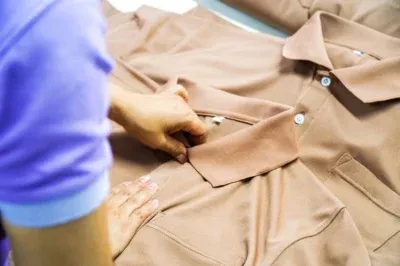 Based on the data above, the brands that survive share common characteristics. Here is a practical framework for reducing your failure risk: Point 1: Validate Before You Produce Test your designs with your target market before committing to a production run. Use pre-orders, social media polls, landing page signups, or sample sales to confirm demand. A brand that validates with 50-100 pre-orders before manufacturing has fundamentally different odds than one that guesses. Point 2: Start With Low Minimums Your first production run should be the smallest viable quantity that lets you test the market. Working with a manufacturer that offers minimums of 50 units per style (rather than 500 or 1,000) lets you test multiple designs without betting your entire budget on a single product. This is why choosing the right manufacturing partner matters from day one. Point 3: Master Your Unit Economics Know your cost per unit, your required markup, your customer acquisition cost, and your break-even point before you spend a dollar on production. If the math does not work on paper, it will not work in practice. Point 4: Build a Sample-First Relationship With Your Manufacturer Request samples before committing to bulk production. Evaluate fabric quality, stitching, fit, and finish before you commit to a full order. A manufacturer that allows you to approve samples before production (and makes revisions without excessive fees) is protecting your brand from quality failures. Point 5: Control Inventory Aggressively Sell through your current inventory before expanding your product line. Dead stock is the silent killer of clothing brands. Plan production runs based on actual sales velocity, not optimistic projections.
Apparel Industry Context: The 2026 Market Landscape
Despite the high failure rate for individual brands, the global apparel market continues to grow. Understanding the broader market helps put the opportunity in perspective:
- The global apparel market reached an estimated $1.9 trillion in revenue in 2026, according to Statista
- The market is projected to grow at a CAGR of 2.6% through 2030, according to Statista market forecasts
- Women’s apparel is the largest segment, with an estimated market volume of $1 trillion in 2026
- The United States alone generates an estimated $373 billion in apparel revenue in 2026
- Online apparel sales represent a growing share, with U.S. online apparel penetration reaching approximately 38% of total sales in 2025
- The activewear and athleisure segment continues to outpace overall market growth
The market is large and growing, but the growth is being captured by established players and the small percentage of new brands that execute well. The opportunity exists, but it rewards precision, not enthusiasm.
Sources and Methodology
The statistics in this article are compiled from the following sources:
- U.S. Bureau of Labor Statistics, Business Employment Dynamics (2024)
- CB Insights, “483 Startup Failure Post-Mortems” (2024)
- LendingTree analysis of BLS data (2026)
- Failory startup failure database
- Exploding Topics industry analysis
- Small Business Trends
- Statista Market Forecast, Apparel Worldwide (2026)
- Fortune Business Insights, Global Apparel Market Report (2025)
- Grand View Research, Apparel Market Size Report (2026)
- McKinsey & Company, State of Fashion 2026 Report
Where clothing-specific data is not available from primary sources, estimates are derived by cross-referencing general retail and small business data from the BLS with fashion-industry-specific analyses. All estimates are labeled as such. Launching a clothing brand in 2026 is risky, but the risk is manageable when you start with the right foundation. At Wears For You, we help new and growing brands manufacture their collections with minimums starting at just 50 units, sample-first production, and direct factory communication via WhatsApp. If you are serious about building a clothing brand that lasts, get a free quote or WhatsApp us directly to start a conversation.